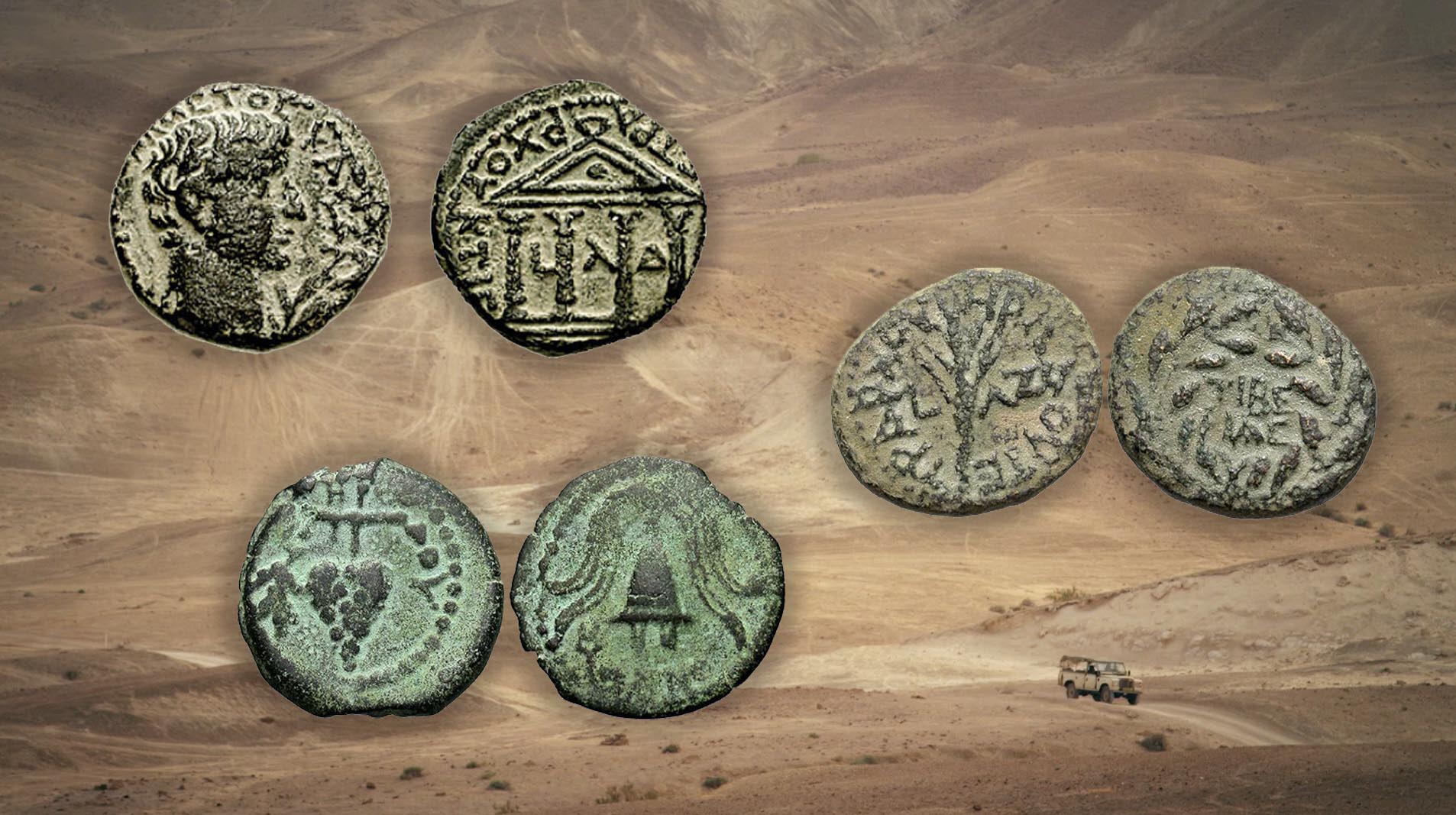
The children of Herod the Great divided up Judea, Galilee and the surrounding territories, and continued as local rulers during the time of Jesus. One way to know these guys were true historical figures is to check out the money from the era.
Like other leaders mentioned in the Gospels, Herod Archelaus, Herod Antipas, and Herod Philip had coins minted with a variety of designs and inscriptions, usually referring to themselves or to the Roman Emperor. Coins discovered at archaeological sites throughout Israel offer remarkable visual evidence for the heirs of Herod the Great.
For instance, Herod Archelaus, the Ethnarch mentioned in Matthew 2:22, minted coins during his short reign. These often depicted grapes, a helmet, a ship bow, and a wreath. Some of the coins also read “Herod Ethnarch.”

Herod Antipas, the Tetrarch, is mentioned throughout the Gospel accounts. Coins of Herod Antipas, ruler of the Galilee region, often included his family name and title “Herod Tetrarch.” Many of his coins depicted wreaths, palm branches, or reeds.

Herod Philip, the Tetrarch, is mentioned in Luke 3:1. Philip struck coins mentioning his name and title, “Philip tetrarch.” He also depicted a profile of the Emperor with his name and title, “Tiberius Caesar,” and a pagan temple.


Interesting!